
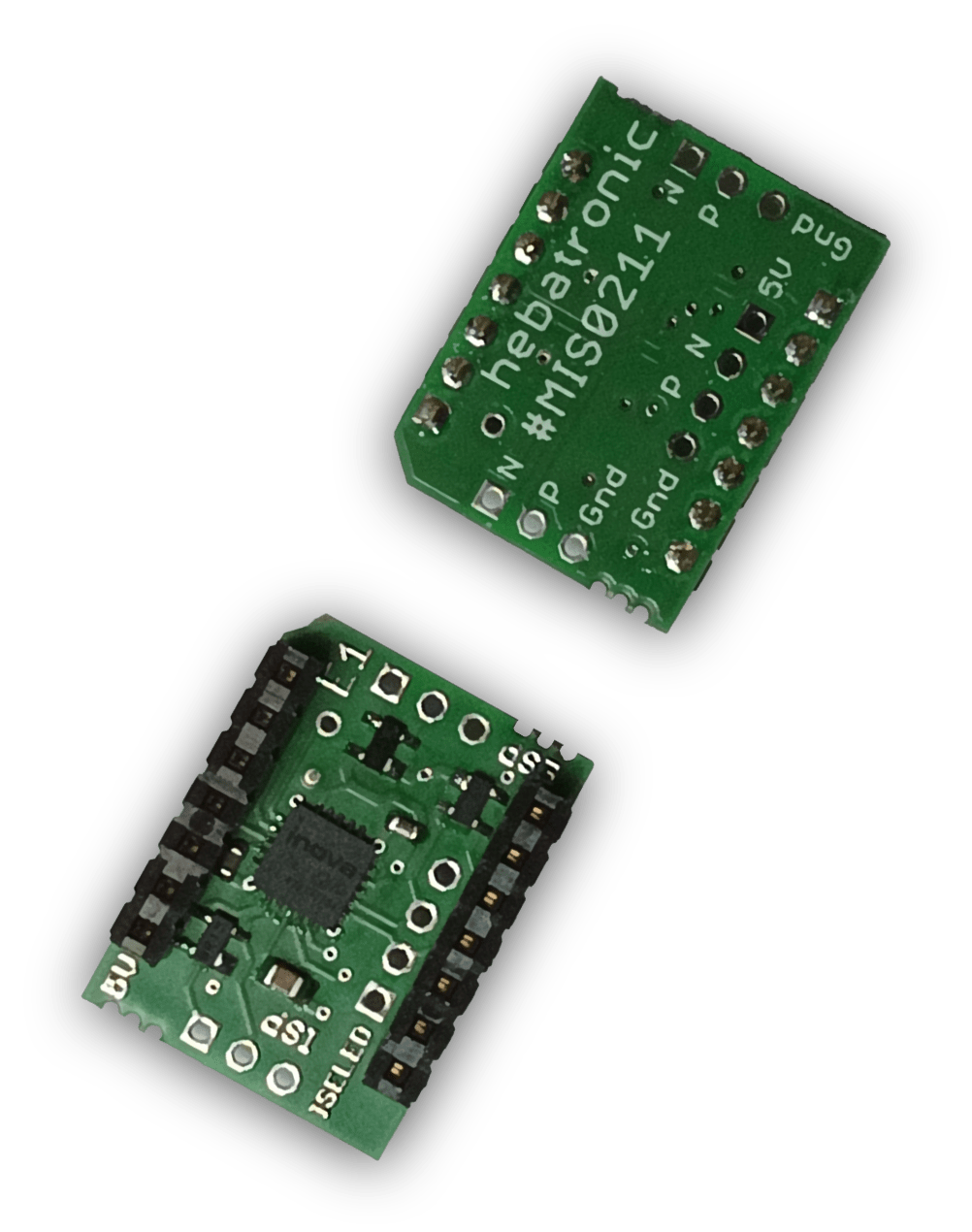
Mini-ILaS®-Shield

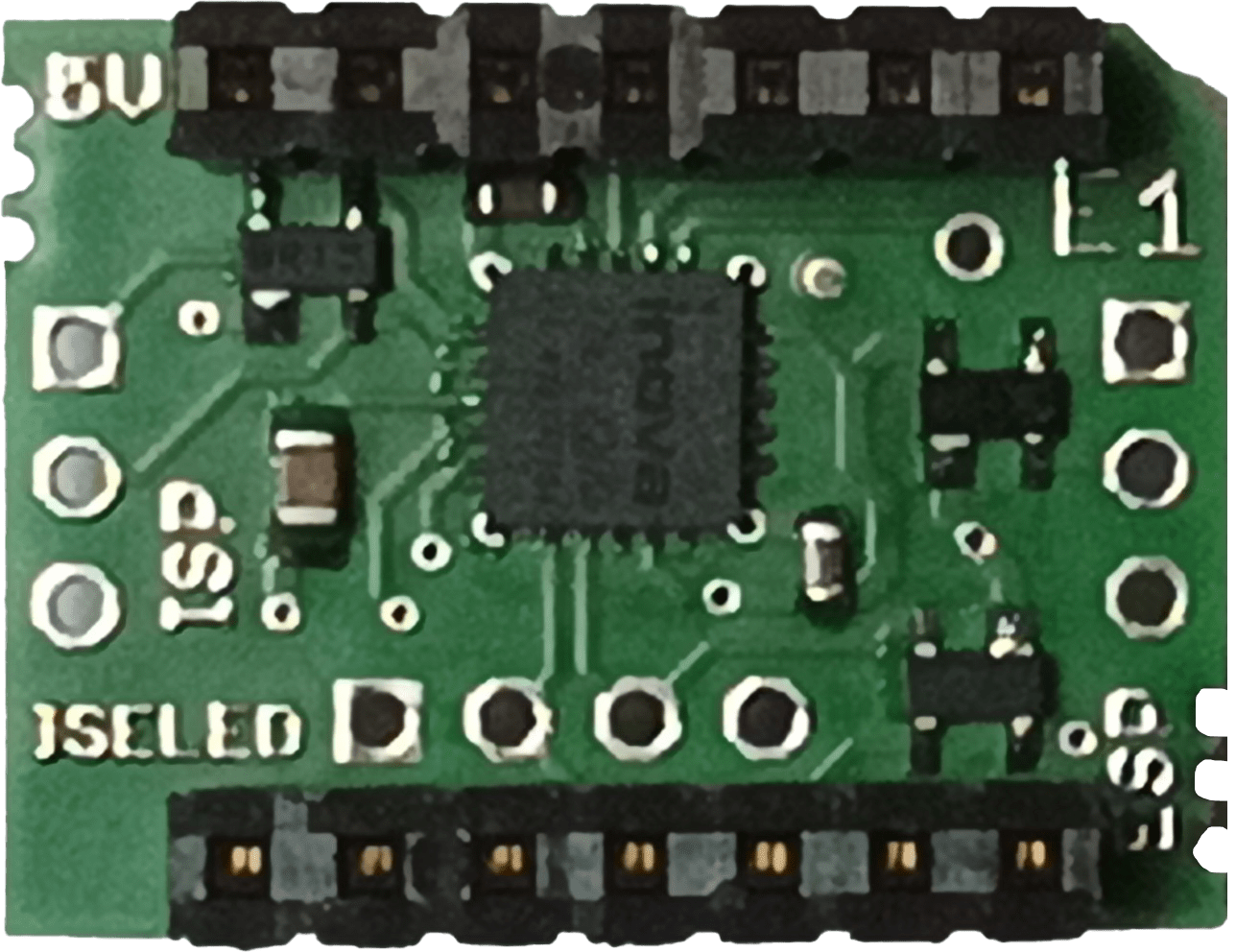
Miniature interface board (18x24mm) specifically designed to work with the Mini-ISELED®uino, allowing for a very compact system to control ILaS® bus protocol or ISELED® without the need for additional hardware.

Hebatronic Produkte ISELED & ILaS Produktfoto Mini-ILaS-Shield

Our solutions guarantee

Hebatronic Produkte ISELED & ILaS Produktfoto Mini-ILaS-Shield

Quick Start Guide as PDF

Enter your e-mail address to get the download link via email.

I agree to the processing of my personal data in accordance with the Privacy Policy and confirm that I have read and understood it.

You will receive a download link via mail.

Easy programming

Technical Aspects

Experience how easy and efficient programming is with our technology. Our development platforms are specifically designed to enable intuitive and powerful control of ISELED® LEDs.

Arduino IDE

The open-source Arduino software (IDE) allows you to quickly and easily upload code to the board. This is a real advantage for our customers, as the platform is particularly intuitive, flexible, and ready to use immediately.

FastLED – Animation library

If you want it to look particularly beautiful, you can easily control your ISELED® lights with the FastLED animation library by simply replacing the FastLED commands with FastISELED.

Find more information here.

Hebatronic Demo Program

Our demo software is an advanced example program that enables the control of ISELED® LEDs via ILaS®. This demo program requires the use of our ISELED®uino with our ILaS® shield to facilitate communication over the ILaS® bus.

ILaS® Network Integration Equipped with the Inova INLT220Q transceiver circuit, this shield enables the Mini-ISELED®uino to create or join a complete ILaS® network of ISELED® nodes.
Operating Modes Supports stand-alone operation or stacked configuration with the Mini-ISELED®uino.
Distributed Light Management Enables networked light management across multiple branches.
Connectivity Designed for easy connection of power supply (5 V), ground, and ILaS® communication lines.
Branch Mode Support Can be operated in branch mode by removing the onboard jumper (for ISP_P/N).
Frequently Asked Questions

Everything you need to know about our Mini-ILaS®-Shield

Here you will find answers to the most common questions about our Mini-ILaS®-Shield. If you need further information, visit our Help Center or contact us directly.
Why does Hebatronic not offer LIN-based solutions?2026-01-29T16:00:37+01:00

Hebatronic deliberately does not offer LIN-based solutions because LIN is not technically suited for modern ILaS® / ISELED® lighting systems beyond basic control functions.

LIN was designed as a low-speed control bus for simple actuators and sensors. With a maximum data rate of approximately 20 kbit/s, LIN is well suited for commands such as on/off, dimming, or basic status signals. However, it reaches its technical limits very quickly when used for today’s dynamic, high-resolution LED lighting systems.

Modern ILaS® / ISELED® applications require:

  • High bandwidth for color and brightness data

  • Deterministic timing for synchronized animations

  • Scalability to hundreds or thousands of LEDs

  • Detailed diagnostic feedback at LED level

These requirements are structurally incompatible with LIN. Using LIN as a transport layer for ILaS® functions inevitably leads to compromises in performance, diagnostics, flexibility, and scalability.

Hebatronic therefore focuses on ILaS-native architectures, where lighting data is handled directly on the ILaS® bus and controlled via industrial, deterministic interfaces (e.g. PLC-based systems). This avoids inheriting the technical limitations of LIN and allows the full capabilities of ILaS® to be used without restriction.

In short:

  • LIN is suitable for controlling simple lighting functions.

  • ILaS® is required for driving complex, modern LED lighting systems.

  • Hebatronic designs its solutions around the requirements of ILaS®, not around the limitations of LIN.

This is a conscious architectural decision to ensure long-term scalability, diagnostic depth, and production robustness.


What is the difference between LIN and ILaS®?2026-01-29T14:48:52+01:00

LIN (Local Interconnect Network) and ILaS® (Intelligent Lighting as a Service) are two fundamentally different communication systems used in vehicles, each designed for a specific purpose.

LIN is a classic, low-cost control bus. It was developed for simple actuators and sensors such as switches, motors, and basic lighting functions. LIN operates at a relatively low data rate and is mainly used to transmit control commands like on/off, dimming, or simple status information.

ILaS®, in contrast, is a high-speed bus specifically designed for modern LED lighting systems. It is optimized for ISELED®-based light modules and transmits synchronized color and brightness data to each individual LED in a chain. In addition, ILaS® enables detailed diagnostic feedback from every LED.

In short:

  • LIN is a control bus for simple functions.

  • ILaS® is a data bus for complex, dynamic LED lighting.

Key differences at a glance:

  • Data rate:
    LIN ≈ 20 kbit/s · ILaS® ≈ 2 Mbit/s

  • Typical use:
    LIN → basic control commands
    ILaS® → high-resolution lighting data and animations

  • Scalability:
    LIN → limited number of nodes
    ILaS® → thousands of LEDs in a single chain

  • Diagnostics:
    LIN → basic
    ILaS® → detailed, per-LED diagnostics

In modern vehicle and EOL test architectures, both systems are often used together:
LIN provides the higher-level control or test interface, while ILaS® handles the precise distribution, synchronization, and diagnostics of the lighting system.


What is ILaS®?2024-11-18T17:18:12+01:00

ILaS® is a new fieldbus that can transmit various light sequences at a bus data rate of 2 Mbit/s, enabling video-speed control. ILaS® stands for “ISELED® Light and Sensor” and is currently mainly used in the automotive sector, particularly by BMW in vehicles starting in 2025. With this fieldbus, not only can LEDs be controlled via the ISELED protocol, but sensors and actuators can also be integrated and read in any quantity and combination. With the continuously growing number of LEDs, especially in vehicles, significantly higher data rates for control and diagnostics can be realized.

How is the ILaS®-Shield (ILaS®duino) operated?2024-11-18T17:27:14+01:00

The ILaS®duino is powered via USB or 12V. To do this, connect the ISELED®uino pins E_P, E_N, and Gnd to ILAS_H_IN, ILAS_L_IN, GND. The ISELED® lighting modules can be powered with external 12V, but it is essential to connect the GNDs together. On the ISELED®uino, all pins can be used except for A3, A5, and A6. These are the communication pins between the microcontroller and the ILaS®-Shield.

Is the software included in the delivery?2025-03-17T20:12:42+01:00

As a rule, the basic firmware is included. Additionally, an example program is available for download in the Help Center.

Is there documentation for the software?2025-03-17T20:29:02+01:00

The documentation is part of the example program, which is available for download in the help center.

Complete solutions

For the complete package – enhance your solution
with our additional products

  • Easy programmability
  • Compact design
  • Future-proof
  • Quick integration
  • High flexibility
  • Mini

    Hebatronic Produkte ISELED & ILaS Grafik Mini-ISELEDuino
    Hebatronic Produkte ISELED & ILaS Produktfoto Mini-ISELEDuino

    Mini-ISELED®uino

    Miniature controller board (18x29mm) as a base for space-constrained ILaS®/ISELED® applications, enabling quick, tailored solutions through a USB interface.

Request a non-binding quote now!

Ready to revolutionize
your lighting systems?

  • Flexible order quantities
  • Made in Germany
  • Worldwide delivery
Go to Top
