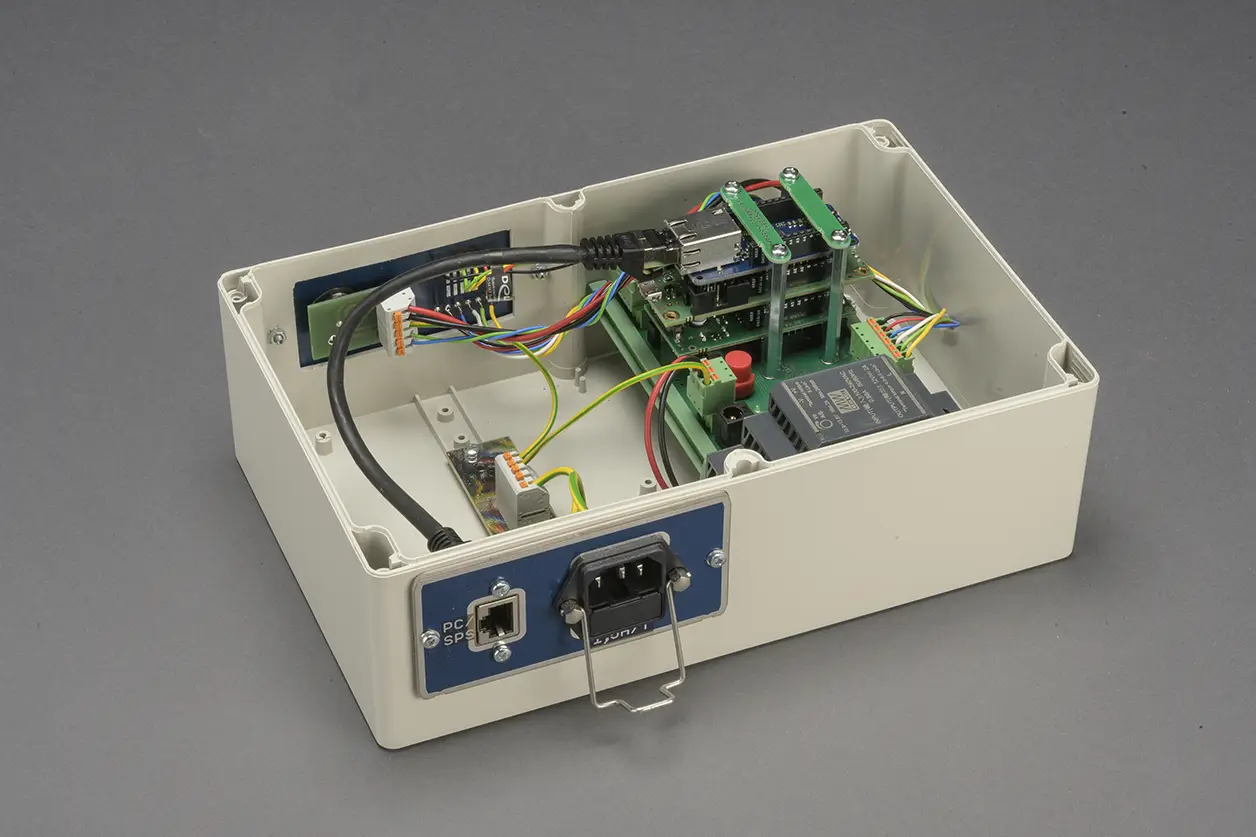
Hebabox

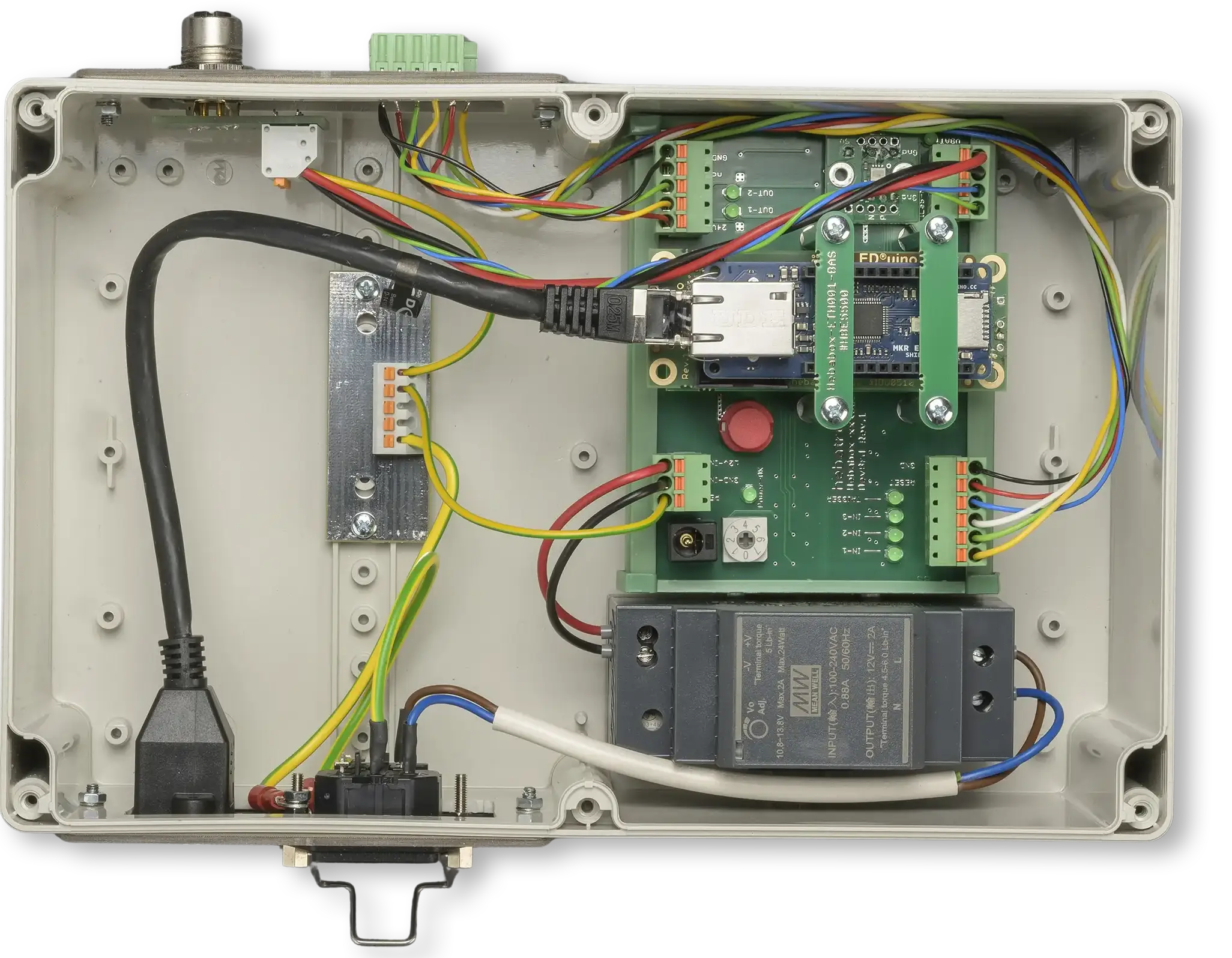
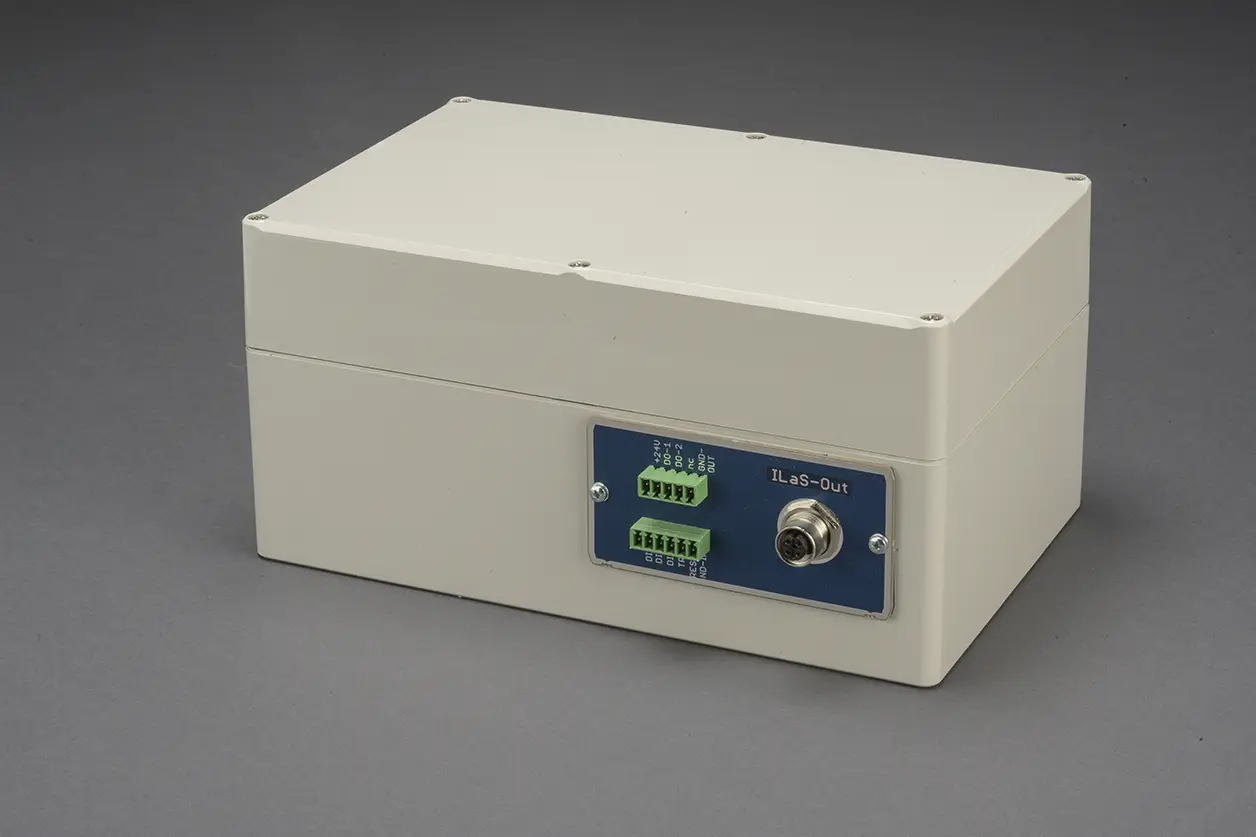
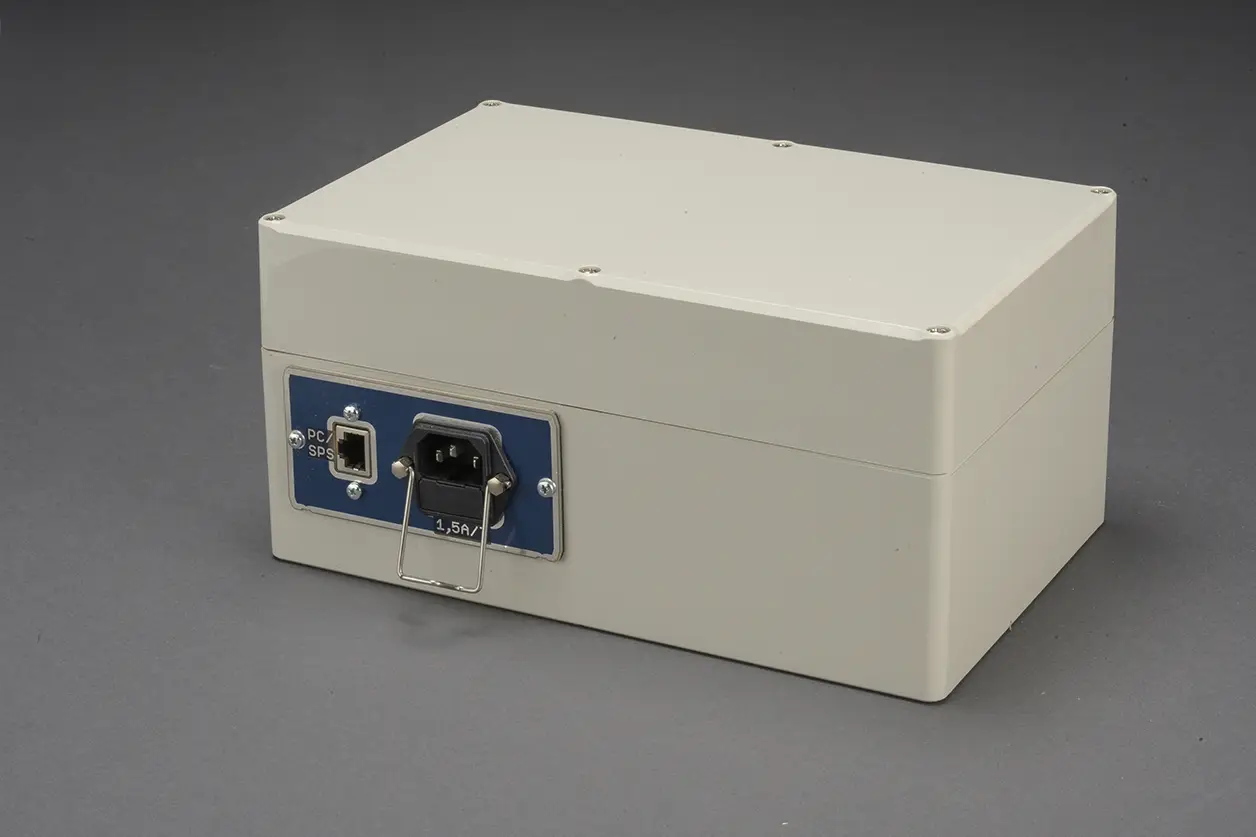
The Hebabox is the robust housing solution for ILaS® and ISELED® systems. It can be mounted on a DIN rail and is ideally suited for integration into control cabinets and end-of-line test benches. With full gateway functionality via Ethernet (Modbus TCP) and digital I/Os, delivered with the latest Hebatronic firmware, it is compact, flexible, and perfectly tailored for automated quality assurance.

Hebabox – Automated gateway solution for ILaS® & ISELED®

Our solutions guarantee

Easy programming

Technical Aspects

Experience how easy and efficient programming is with our technology. Our development platforms are specifically designed to enable intuitive and powerful control of ISELED® LEDs.

Arduino IDE

The open-source Arduino software (IDE) allows you to quickly and easily upload code to the board. This is a real advantage for our customers, as the platform is particularly intuitive, flexible, and ready to use immediately.

FastLED – Animation library

If you want it to look particularly beautiful, you can easily control your ISELED® lights with the FastLED animation library by simply replacing the FastLED commands with FastISELED.

Find more information here.

Hebatronic Demo Program

Our demo software is an advanced example program that enables the control of ISELED® LEDs via ILaS®. This demo program requires the use of our ISELED®uino with our ILaS® shield to facilitate communication over the ILaS® bus.

PLC integration for ILaS® networks

Control ILaS® from the PLC
– fast, secure, scalable

The Hebabox makes setpoints and status information of your ILaS® nodes directly available in the PLC via Modbus TCP. This allows you to integrate EOL test benches and automation systems without extensive adjustments.

Why Hebabox?

  • Plug & Integrate: Easy integration via Ethernet/Modbus TCP – existing controls remain in place.
  • Transparent access: Clearly structured register mapping for commands, parameters, results.
  • Scalable & generic: Works with different ILaS® topologies and node configurations.
  • Production-ready: Robust for EOL testing, rework stations, and series production.
  • PLC retains the logic: Test sequences and semantics remain in your control system – the Hebabox provides the access.

01/04

How the Hebabox works

  • 1
    Select command & write parameters – via Modbus register.
  • 2
    Execute – the Hebabox (ISELED®uino + Hebatronic library) communicates with the ILaS® nodes.
  • 3
    Read result – status and data are returned in a structured way via registers.

If desired, we adapt the command set and register layout to your project-specific needs.

02/04

Integration & compatibility

  • PLC-agnostic: e.g., Siemens S7/TIA, Beckhoff, CODESYS, and others.
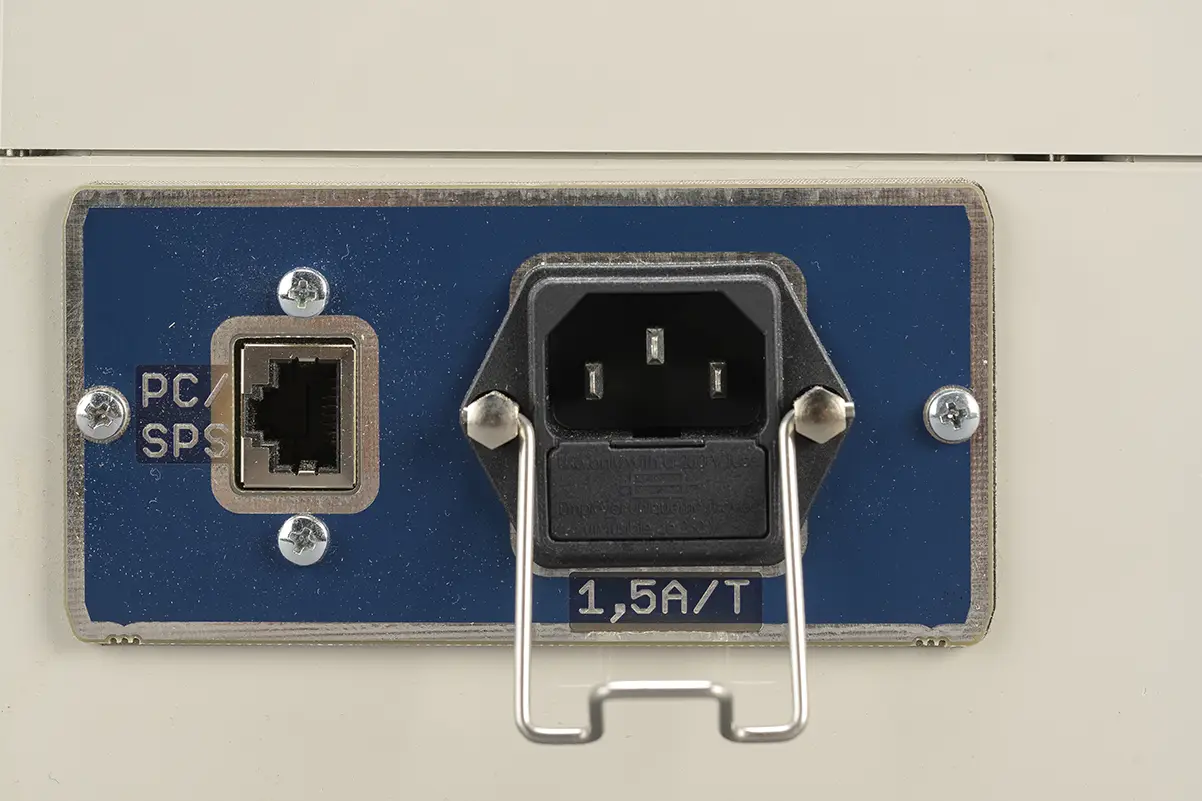
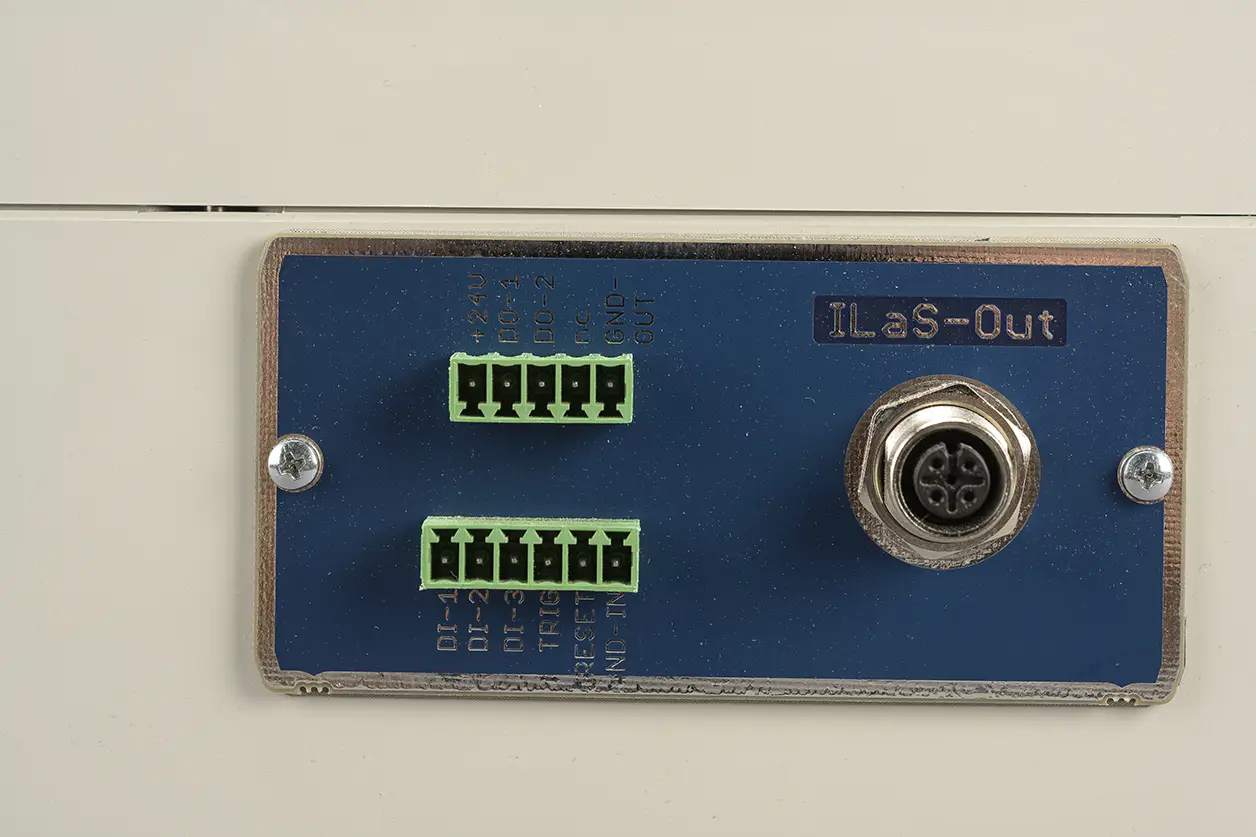
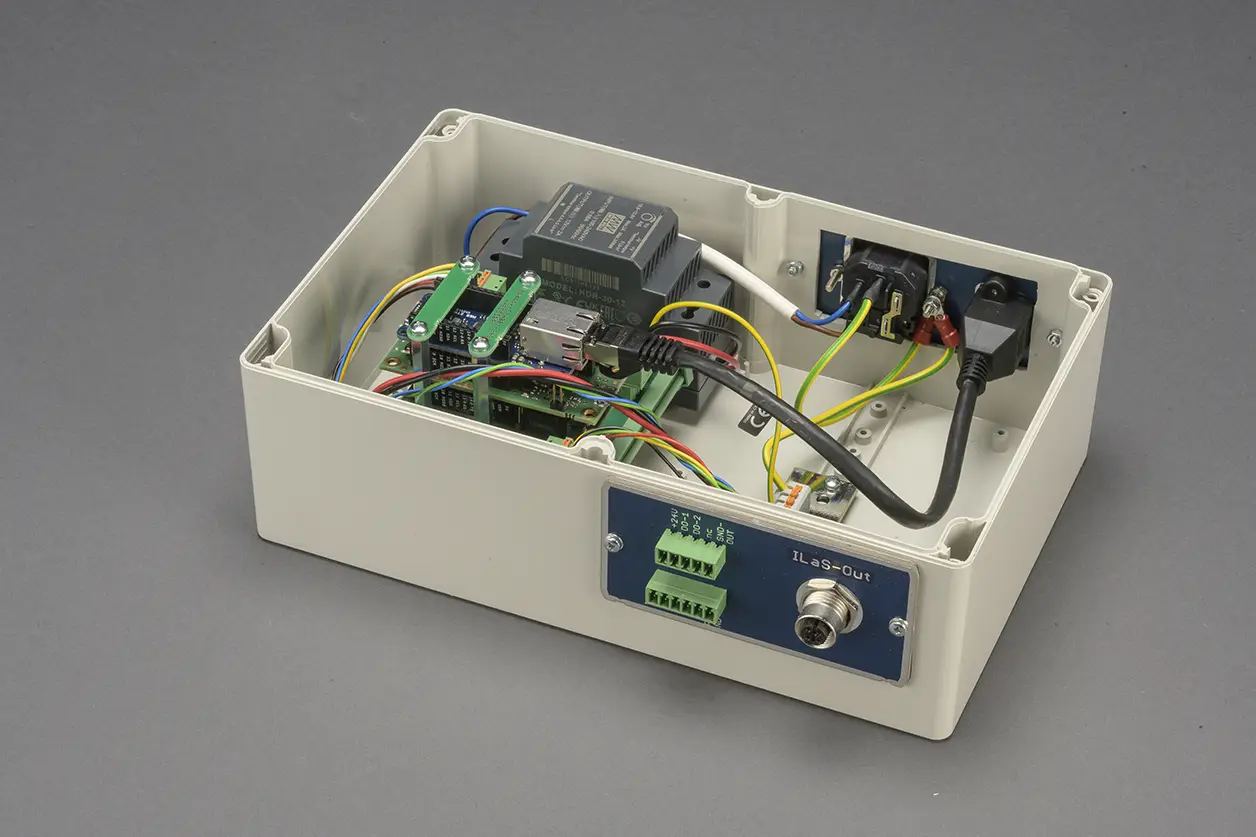
  • Interfaces: Ethernet (RJ45, Modbus TCP), 24 V digital inputs/outputs (trigger/reset/status), ILaS® bus output.
  • Mounting & power supply: DIN rail, integrated power supply (IEC 60320).

Optional: We implement use-case-specific embedded extensions (e.g., performance optimization) as needed.

03/04

Technical Change Note – Bootloader (SAMD21)

For the Hebabox and Hebastack, a modified version of the Arduino SAMD21 bootloader is used.

The modification is deliberately minimal and affects only one file: bootloaders/zero/main.c

In this file, an additional security routine has been integrated: security_bit_check_and_set()

Purpose of this modification:
Checks during boot whether the SAMD21 Security Bit (SSB) is already set
Automatically sets the SSB if it is not yet activated
Ensures that the microcontroller cannot be read out without a full chip erase
Provides reliable firmware protection for the Hebabox / Hebastack
The application firmware itself is not affected by this modification and remains fully proprietary.

See our compliance information here.

04/04

Hebabox

How do you connect the Hebabox to a PLC?

PLC integration

ILaS® directly at the PLC — ready to use: either via Ethernet/Modbus TCP or via 24 V I/Os. Seamlessly integrable into existing lines; trigger/reset/status optionally via register access or I/O. The ILaS® bus is controlled directly by the Hebabox. Scalable, robust – ideal for EOL testing, rework, and series production.

01/03

Digital I/Os for test systems

Thanks to integrated digital inputs and outputs, assemblies and test sequences can be controlled directly. This enables reliable control and monitoring of test functions in real time.

02/03

Scalable gateway solution

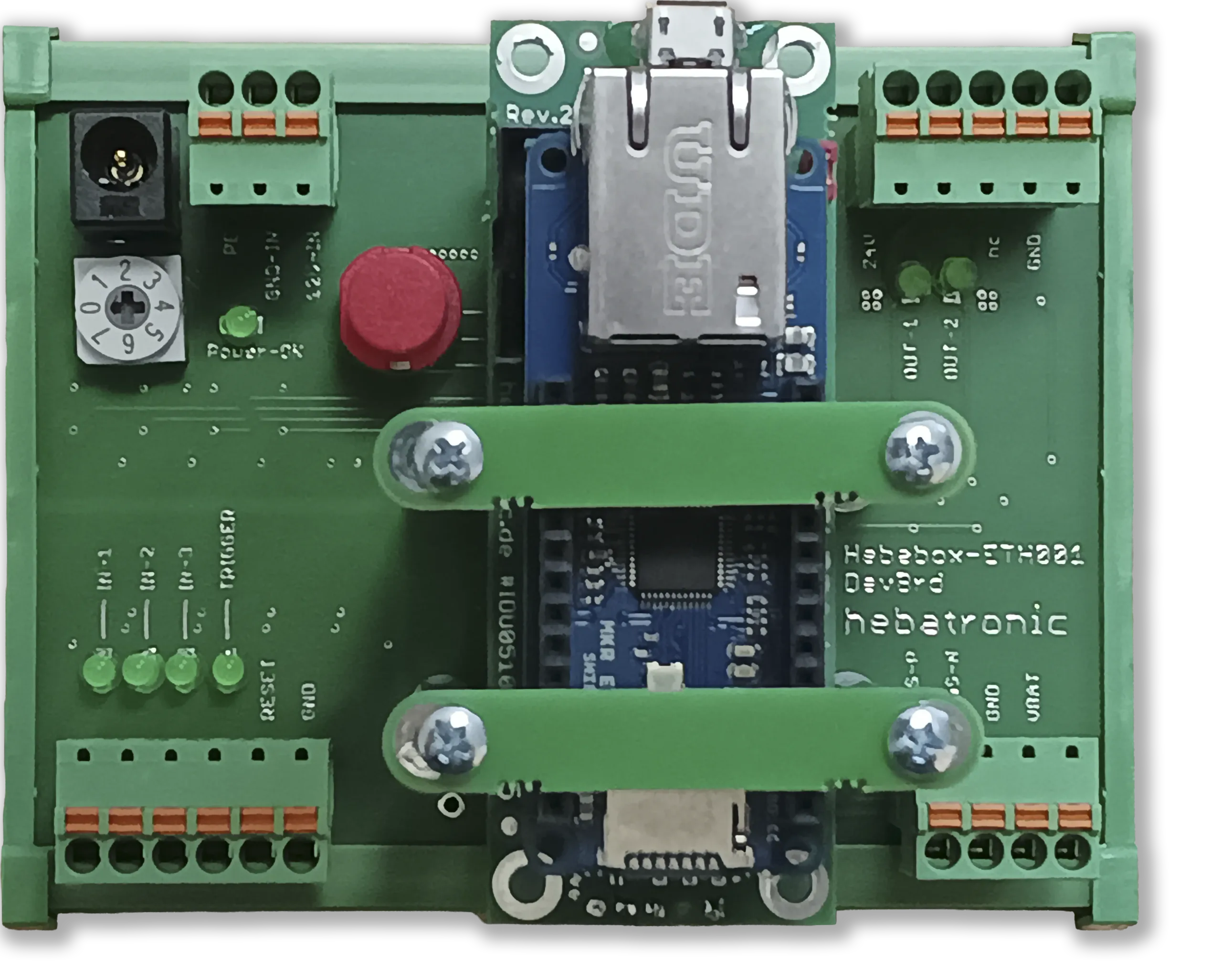
The Hebabox is based on our proven platform components – ISELED®uino and ILaS® shield as well as an Arduino® MKR Ethernet shield. It is available as a desktop device, DIN rail module, or rework box; all variants can be assembled modularly and expanded as needed – ideal for use in industrial testing and production lines.

03/03

Frequently Asked Questions

Everything you need to know about our Hebabox

Here you will find answers to the most common questions about our Hebabox. If you need further information, visit our Help Center or contact us directly.

What is the difference between Digital I/O and Modbus TCP for EoL testing with Hebabox / Hebastack ?2026-02-01T15:55:19+01:00

Both Digital I/O and Modbus TCP can be used to integrate Hebabox / Hebastack into an End-of-Line (EoL) test system. The key difference lies in functionality, data depth, and scalability.


Digital I/O (discrete signals)

With Digital I/O, the Hebabox/Hebastack is controlled via simple binary signals (24 V inputs/outputs).

Typical use cases

  • Start / stop a test cycle

  • Reset

  • Output overall status signals such as Busy, OK, or NOK

Characteristics

  • Very simple and robust

  • No Ethernet or network configuration required

  • Limited to ON/OFF signals

  • No parameterization, detailed diagnostics, or measurement data transfer

  • Ethernet hardware is not required

Best suited for

  • Very simple EoL setups

  • Legacy systems

  • Applications with minimal functional requirements


Modbus TCP (Ethernet-based communication)

With Modbus TCP, the Hebabox/Hebastack communicates with the PLC via Ethernet using structured data registers.

Typical use cases

  • Start / stop and full control of test sequences

  • Parameterization (e.g. light values, modes, sequences)

  • Reading detailed status, diagnostics, and error codes

  • Logging and traceability in production systems

Characteristics

  • Significantly higher functional depth

  • Structured data exchange instead of single bits

  • Scalable and future-proof

  • Enables detailed diagnostics and transparency

  • Requires Ethernet connection and PLC-side Modbus implementation

Best suited for

  • Modern EoL production lines

  • Automated test systems with traceability requirements

  • OEM / Tier-1 environments


Which option do we recommend?

While both options are supported, we clearly promote Modbus TCP for EoL testing:

  • Higher functional value

  • More diagnostic and test content

  • Better scalability

  • Preferred and approved interface in BMW production environments

Digital I/O remains an option for minimal setups, but Modbus TCP is the recommended choice for professional, production-grade EoL testing with Hebabox and Hebastack.


Why does Hebatronic not offer LIN-based solutions?2026-01-29T16:00:37+01:00

Hebatronic deliberately does not offer LIN-based solutions because LIN is not technically suited for modern ILaS® / ISELED® lighting systems beyond basic control functions.

LIN was designed as a low-speed control bus for simple actuators and sensors. With a maximum data rate of approximately 20 kbit/s, LIN is well suited for commands such as on/off, dimming, or basic status signals. However, it reaches its technical limits very quickly when used for today’s dynamic, high-resolution LED lighting systems.

Modern ILaS® / ISELED® applications require:

  • High bandwidth for color and brightness data

  • Deterministic timing for synchronized animations

  • Scalability to hundreds or thousands of LEDs

  • Detailed diagnostic feedback at LED level

These requirements are structurally incompatible with LIN. Using LIN as a transport layer for ILaS® functions inevitably leads to compromises in performance, diagnostics, flexibility, and scalability.

Hebatronic therefore focuses on ILaS-native architectures, where lighting data is handled directly on the ILaS® bus and controlled via industrial, deterministic interfaces (e.g. PLC-based systems). This avoids inheriting the technical limitations of LIN and allows the full capabilities of ILaS® to be used without restriction.

In short:

  • LIN is suitable for controlling simple lighting functions.

  • ILaS® is required for driving complex, modern LED lighting systems.

  • Hebatronic designs its solutions around the requirements of ILaS®, not around the limitations of LIN.

This is a conscious architectural decision to ensure long-term scalability, diagnostic depth, and production robustness.


What is the difference between LIN and ILaS®?2026-01-29T14:48:52+01:00

LIN (Local Interconnect Network) and ILaS® (Intelligent Lighting as a Service) are two fundamentally different communication systems used in vehicles, each designed for a specific purpose.

LIN is a classic, low-cost control bus. It was developed for simple actuators and sensors such as switches, motors, and basic lighting functions. LIN operates at a relatively low data rate and is mainly used to transmit control commands like on/off, dimming, or simple status information.

ILaS®, in contrast, is a high-speed bus specifically designed for modern LED lighting systems. It is optimized for ISELED®-based light modules and transmits synchronized color and brightness data to each individual LED in a chain. In addition, ILaS® enables detailed diagnostic feedback from every LED.

In short:

  • LIN is a control bus for simple functions.

  • ILaS® is a data bus for complex, dynamic LED lighting.

Key differences at a glance:

  • Data rate:
    LIN ≈ 20 kbit/s · ILaS® ≈ 2 Mbit/s

  • Typical use:
    LIN → basic control commands
    ILaS® → high-resolution lighting data and animations

  • Scalability:
    LIN → limited number of nodes
    ILaS® → thousands of LEDs in a single chain

  • Diagnostics:
    LIN → basic
    ILaS® → detailed, per-LED diagnostics

In modern vehicle and EOL test architectures, both systems are often used together:
LIN provides the higher-level control or test interface, while ILaS® handles the precise distribution, synchronization, and diagnostics of the lighting system.


Is the Hebabox/Hebastack suitable for future ISELED® generations?2025-09-25T14:07:40+02:00

Yes, the Hebabox/Hebastack is scalable and future-proof. It comes with the current Hebatronic software and can be flexibly extended for future ISELED® generations.

Can the Hebabox/Hebastack be used in EOL test benches?2026-02-01T16:01:57+01:00

Yes. Hebabox and Hebastack are specifically designed for use in automated End-of-Line (EoL) test systems and are intended for series production environments.

They act as a robust, PLC-integrated gateway between the test system and the ILaS® / ISELED® bus, enabling deterministic and reproducible testing under real production conditions.

Typical EoL test functions include:

  • Deterministic initialization of the ILaS® bus

  • Automatic node detection (node count / presence check)

  • Verification of communication integrity and timing

  • Evaluation of module status and error conditions

  • Functional activation of light modules for GO / NO-GO decisions

Integration into the test system

  • PLC connection via Modbus TCP (recommended for maximum functionality and diagnostics)

  • Alternatively via Digital I/O for simple, minimal EoL setups

  • Clear separation between test logic (PLC) and gateway functionality (Hebabox / Hebastack)

Production and OEM readiness

  • Designed for continuous operation in production lines

  • Scalable to different test depths and requirements

  • Used and approved in OEM and Tier-1 EoL environments (e.g. BMW)

In short:
Hebabox and Hebastack are not laboratory tools — they are production-grade EoL components that integrate seamlessly into modern, PLC-controlled test systems.

In which variants are the Hebabox/Hebastack available?2025-09-25T14:09:46+02:00

In which variants are the Hebabox/Hebastack available?

The Hebabox and Hebastack product family offers flexible gateway solutions for ILaS® and ISELED® systems – from robust devices in IP-protected housings to compact board stacks for direct control cabinet integration.

  • Hebabox: three variants (Connect, Control, Core) for Ethernet connectivity, PLC communication, and manual rework.
  • Hebastack: two variants (Connect, Compact) as space-saving board stacks for industrial automation and PLC control.

This provides a total of five models, suitable for everything from EOL testing and quality assurance to fully automated production – always delivered with the latest Hebatronic software preinstalled and future-proof for upcoming ISELED® generations.

What interfaces does the Hebabox/Hebastack offer?2025-09-25T14:11:49+02:00

In addition to Ethernet (Modbus TCP), the Hebabox/Hebastack features digital inputs and outputs (I/Os) for direct control of assemblies and test systems.

With which PLC systems is the Hebabox/Hebastack compatible?2025-09-25T14:11:13+02:00

The Hebabox/Hebastack supports all common PLC controllers that communicate via Modbus TCP. This makes it flexible for integration into existing automation and production systems.

Complete solutions

For the complete package – enhance your solution
with our additional products

  • Easy programmability
  • Compact design
  • Future-proof
  • Quick integration
  • High flexibility
  • New series

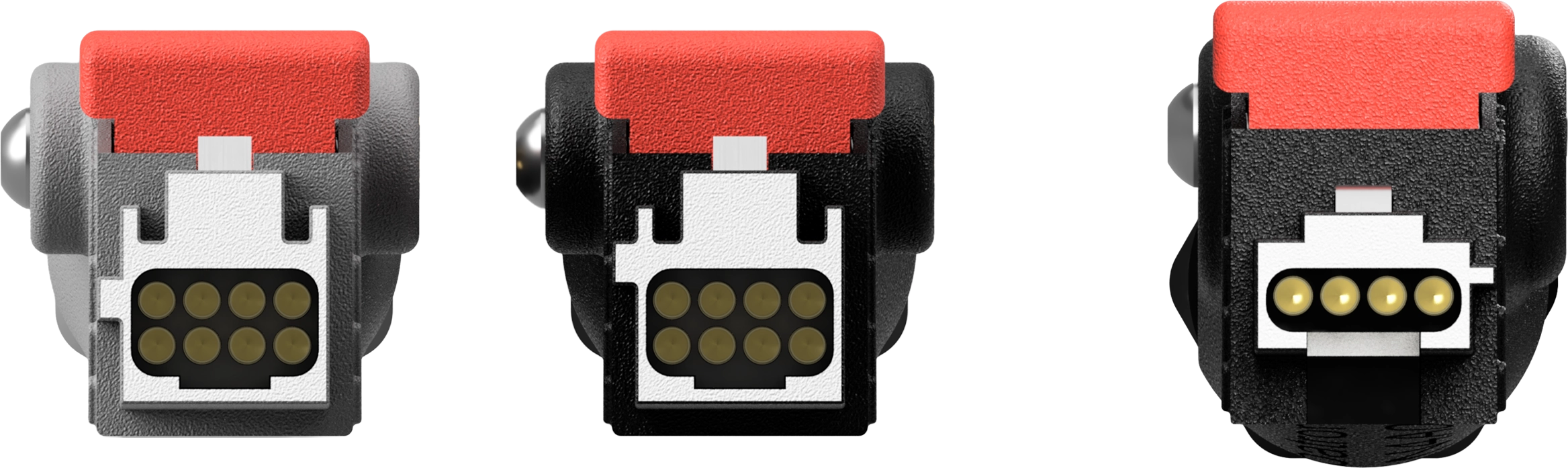
    Hebatronic 3D Connector Series

    Precise, robust, and customizable connectors for prototypes, validation, and EoL testing. Hebatronic’s 3D connectors combine mechanical stability with maximum flexibility. They are manufactured using SLS or MJF processes and are optimized for prototypes, test benches, EoL testers, and small series—ideal for applications such as ISELED®, ILaS®, or LED modules.

  • New

    Hebastack – Compact board stack solution for ILaS® & ISELED®
    Hebabox – Automated gateway solution for ILaS® & ISELED®

    Hebastack

    The Hebastack is the compact board-stack solution for ILaS® and ISELED® systems. Without housing, without power supply, and even more compact than the Hebabox, it is specifically designed for direct integration into control cabinets and EOL test benches. It provides full gateway functionality with Ethernet (Modbus TCP) and digital I/Os – extremely space-saving, flexible, and ideal for automated quality assurance.

Request a non-binding quote now!

Ready to revolutionize
your lighting systems?

  • Flexible order quantities
  • Made in Germany
  • Worldwide delivery
Go to Top